
SOME NOTES ON DAY BOOK
Processing a book that is still in-process

THINGS I’D LIKE TO SHARE
Wayzgoose ORD, a reclamation for the letterpress community: https://www.wayzgooseord.com/
NLP author Mary Margaret Alvarado wrote another beautiful essay, published in The Atavist: https://magazine.atavist.com/2026/thats-somebodys-son-schizophrenia
Book artist Karen Hanmer is publishing her workshop handouts. This is an incredible resource: https://karenhanmer.com/handouts
All the fairs, in website and newsletter form: artbookfairs.com
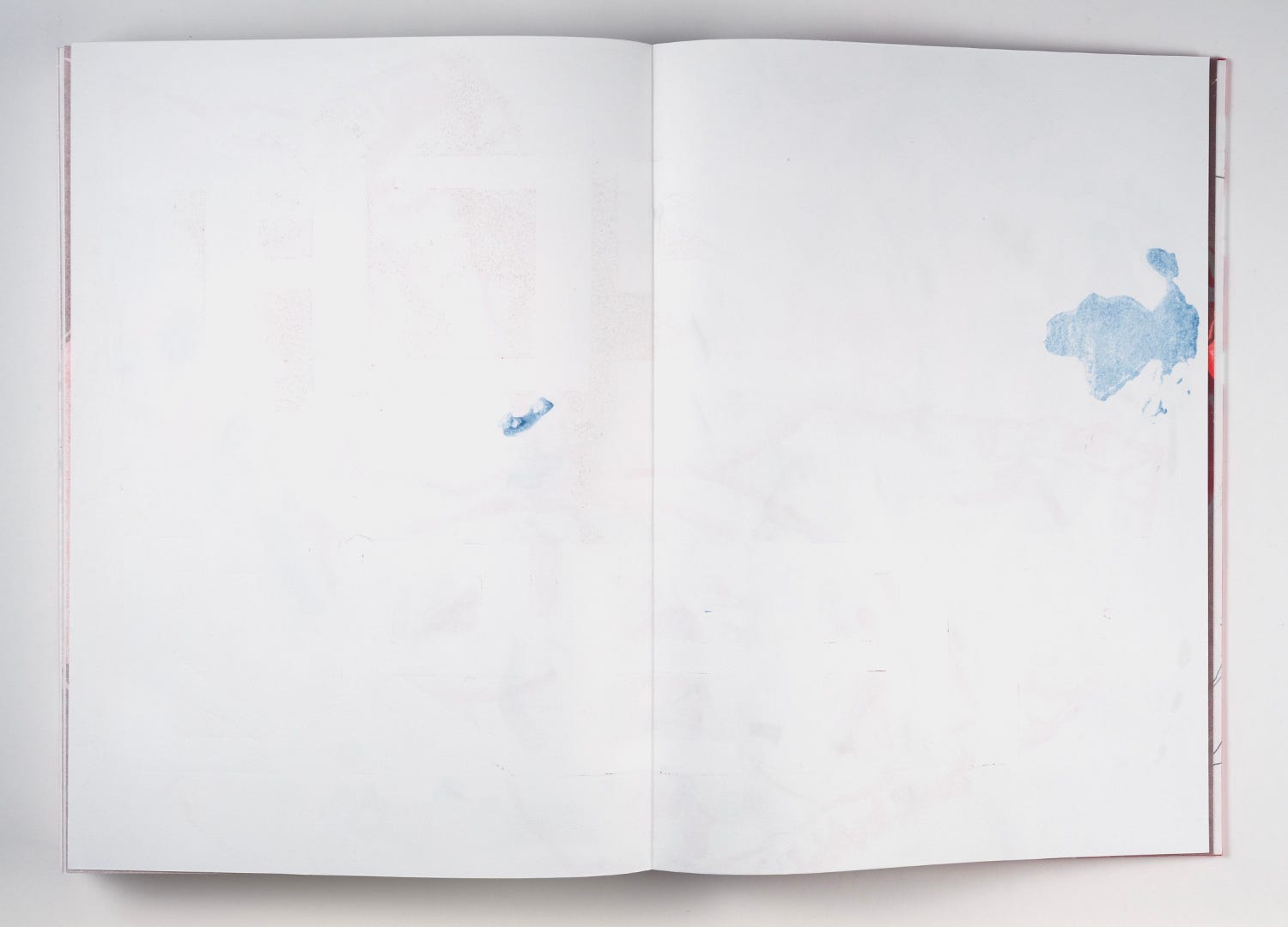
In February I finished the first three copies of Day Book. There are twelve more to go, nine for the edition plus three artist’s proofs. What follows is a collection of notes on the book, the ideas that led me to its particular construction, and then some other things that emerged along the way. With these notes being part of, and not the end of, “along the way.” There is no specific sequence or hierarchy to these notes.
You can find a proper website post about the book here, with many images (some of which will be used in this post), the specs and price, and a video showing a complete page-through of one copy.
Imagining an edition in different ways, as opposed to just a number of copies. For example, an edition that is limited by the time of production, like the amount of copies that can be produced in a single hour, day, or week. Or based on a specific amount of materials, such as paper. Or, as in the NLP book Drift • Fragment, a single text randomly distributed throughout all of the copies. Or number of copies being just one dimension of an edition. Dimensions as in “length x width x height.” Other dimensions might include: number of variants, time of edition, distribution of content, etc. “Number of copies x number of variants x time of edition.”
Idea: write equations that express different edition structures. Make books based on those equations. Examples: Total edition = (number of copies x number of variants) / time of edition. Distribution of content = amount of materials / time of edition. Etc.
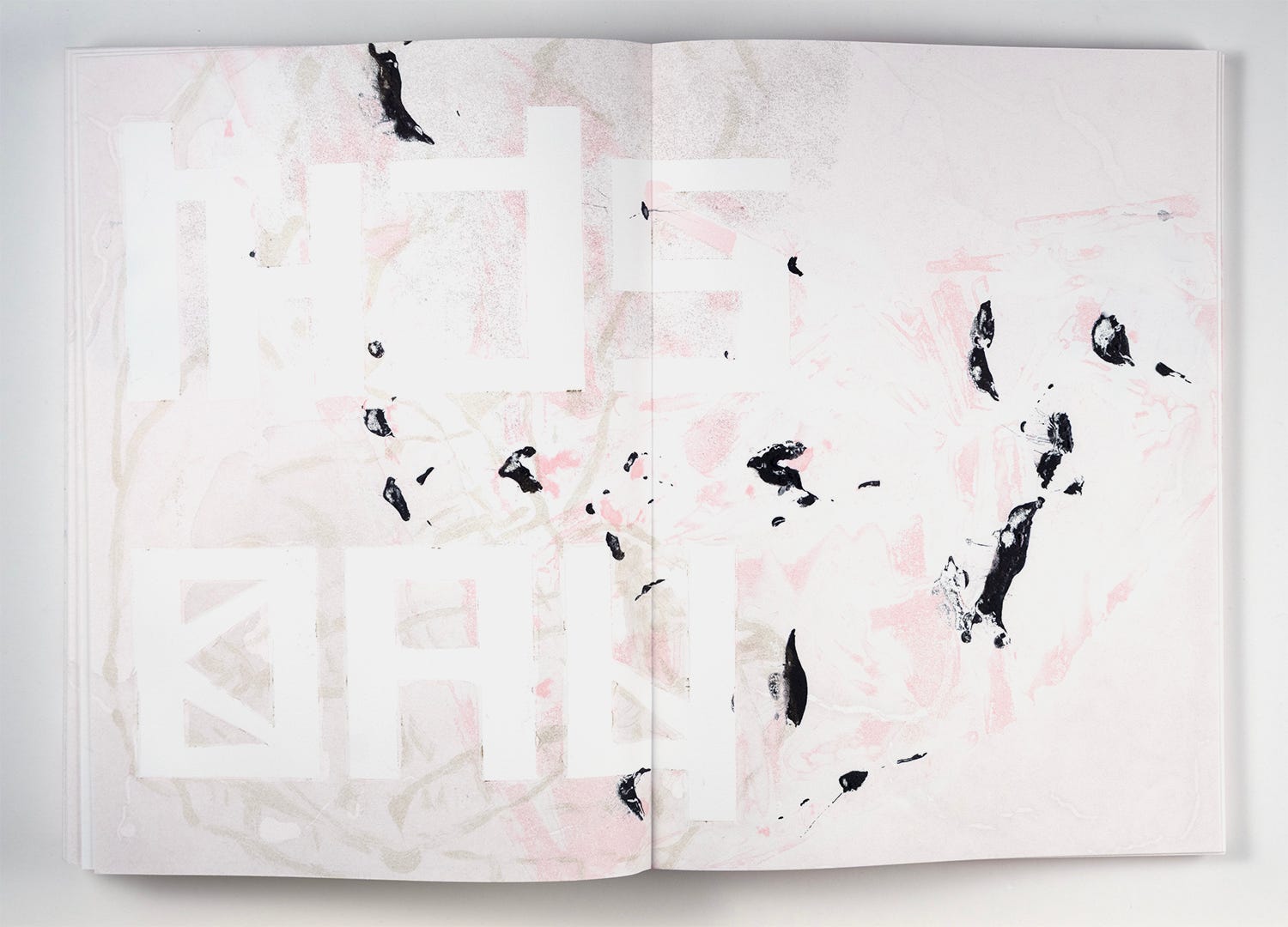
So how can an edition show these other dimensions? In Day Book each copy is also its own edition, in that each copy starts with its own set of four plates, and then the spreads of the book are all of the prints from those plates, presented in the sequence in which they were printed. One sequence going “forward” and the other “reversed.” Alternating. The sequence manifested in the prints by not reinking during printing, so each print becomes lighter and lighter. (A book of ghosts.)
A book of ghosts = a book of the dead = a “book of going forth by day” = Day Book = a book of hours.
Day Book: Number of copies = number of variants (15). Time of edition = number of prints (30) x number of plates (4 (initial plates) + 1 (monoprints)). Total edition = (number of copies x time of edition) + x + y. The total edition of Day Book is 2,250 unique prints + x + y. x = the second part of the structure. y = the third part.
That sequence of ghosts forms a structure, a skeleton, on which other parts can be built. In Day Book those parts weren’t pre-planned. The skeleton existed first, then an idea, a second structure (x), for how to add to it emerged. Then a text, then a composition in time and space for that text, then the text printed, then the images built around and over that text. These are the delaminated pages and smaller booklets, sewn into the drumleaf skeleton.
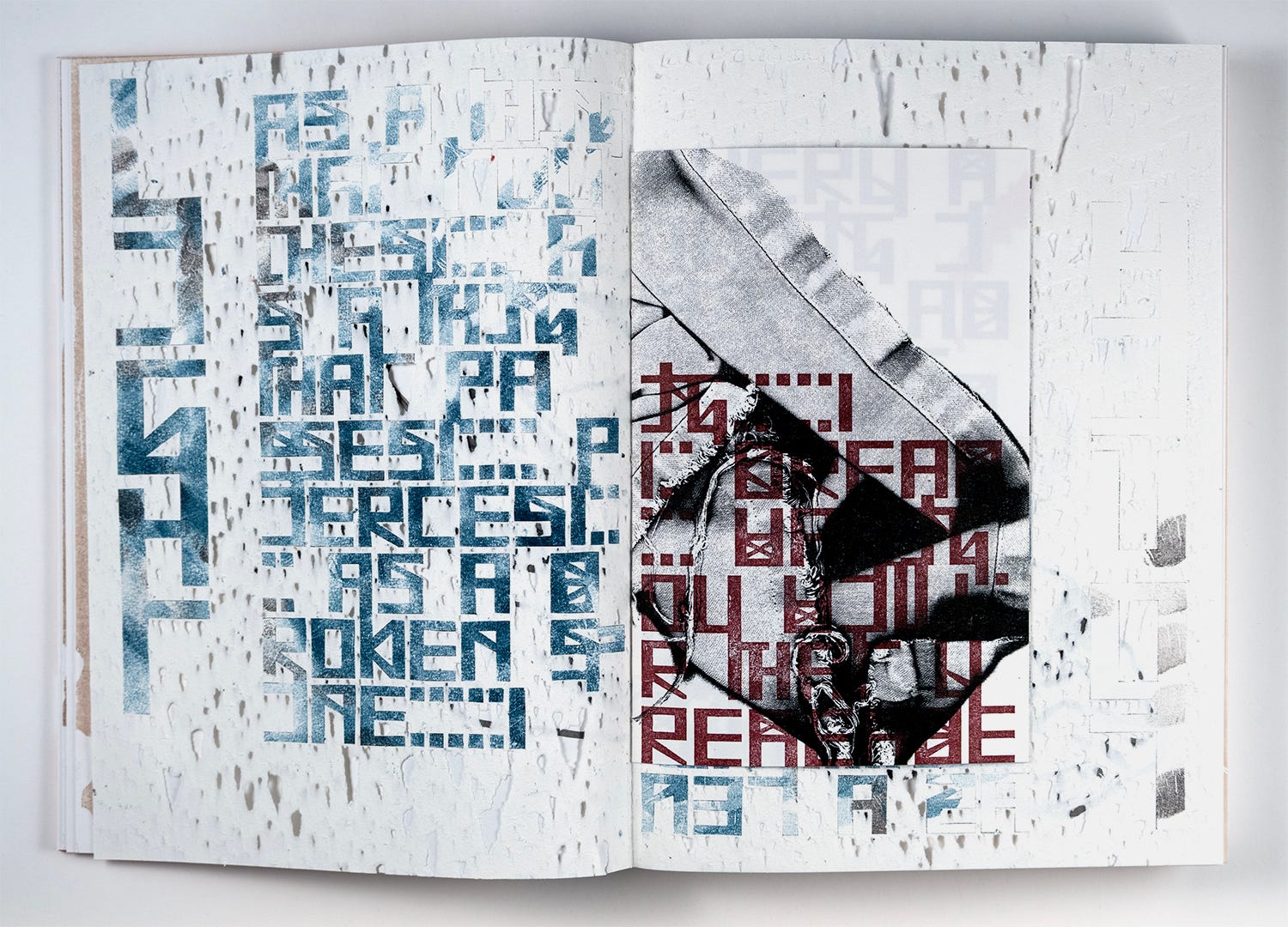
The drumleaf binding, where a book can be printed as individual spreads without having to worry about front/back and imposition, was ideal for Day Book. But how to make it more than just convenient? How to complicate that structure? How to use more of the available surface of the book? This is the third part of the structure (y).
Idea: Make a skeleton for an edition by printing the same plate(s), but for each print, first printing on the tympan, then feed the sheet and print as normal. This will produce a mirrored print on the two sides of the sheet. Keep printing without reinking, until most or all of the ink is run off of the press. Those prints become the basis for the entire edition. Keep in sequence or distribute randomly against more layers and/or different copies.
Every book is a mirror of our own experience of time. Structure, repetition, difference.
Structure y is built inside of the drumleaf skeleton, around the booklets and covers. It is drawings, unique to each copy, that appear on the “backs” of the drumleaf pages and are only visible in the transparency of the pages (depending on light) and through the delamination in structure x. (A book of ghosts.)
Is a book of series of walls with writing on them? Do we read it and enclose ourselves? Or is a book of series of windows/mirrors that we step deeper into as we read each page? In either case, how do we get out?
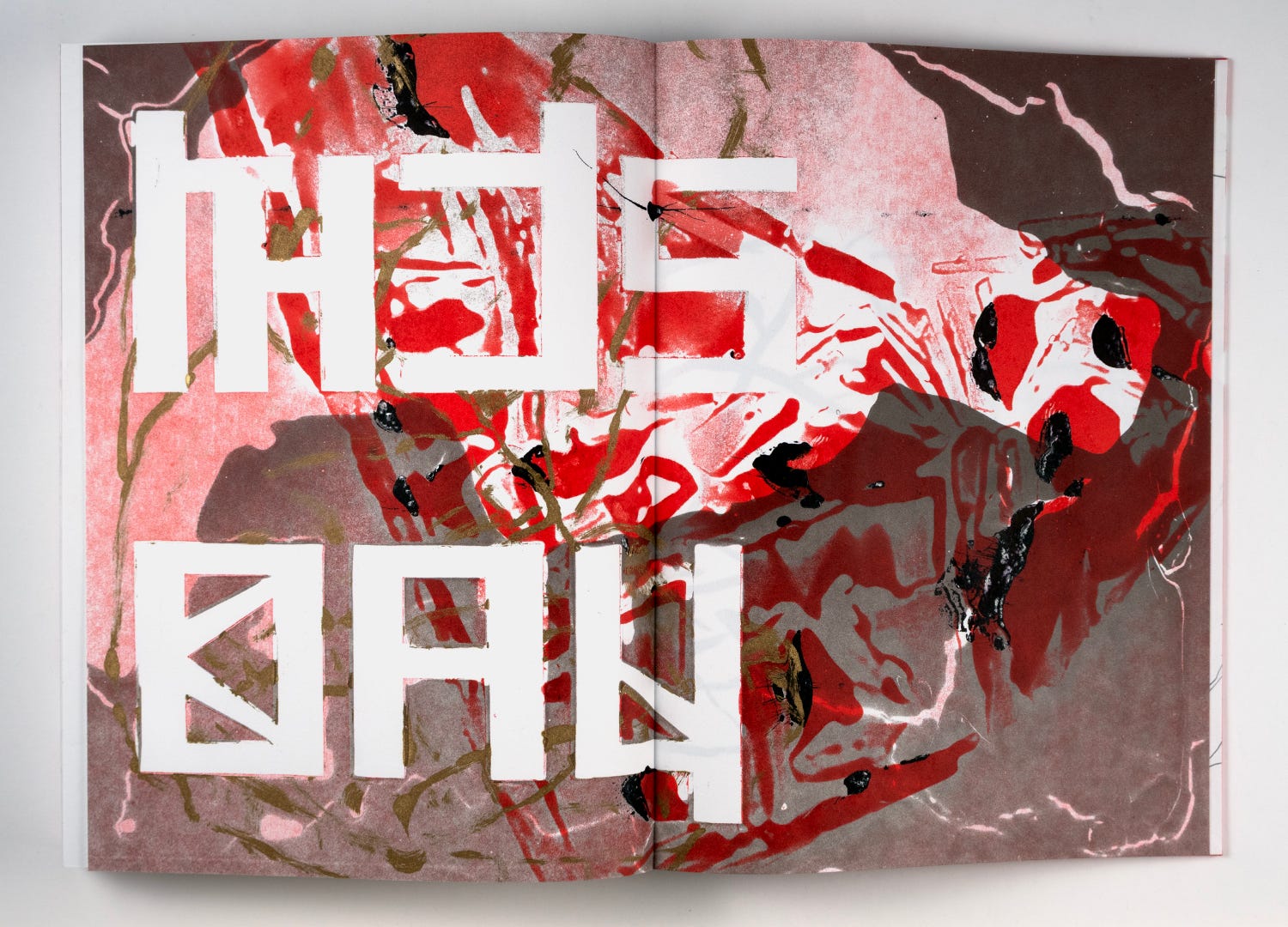
Day Book is held together by attention, in the form of observational drawing. Still-lifes. (A book of ghosts.) Drawing is also what splits the edition into its variants. Each set of plates is different because they have different drawings for their compositions. Each of the drawings in the booklets of structure x are different. And the covers and the endsheets and the labels on the box and structure y. Attention, again and again and again, is the book.
As I was drawing, feeling the pencil carving into the cotton paper, I thought about inscription. Inscription vs. writing vs. drawing vs. reading. How do they all connect? Inscription as writing as drawing as reading. I thought about the Egyptian Book of the Dead (book of going forth by day) and the text in scrolls, on walls and on sarcophagi. Each inscription a prayer, a spell. Filling the space. Surrounding and aiding the deceased on their journey.
There are secret drawings/inscriptions in Day Book. Some of them are visible.
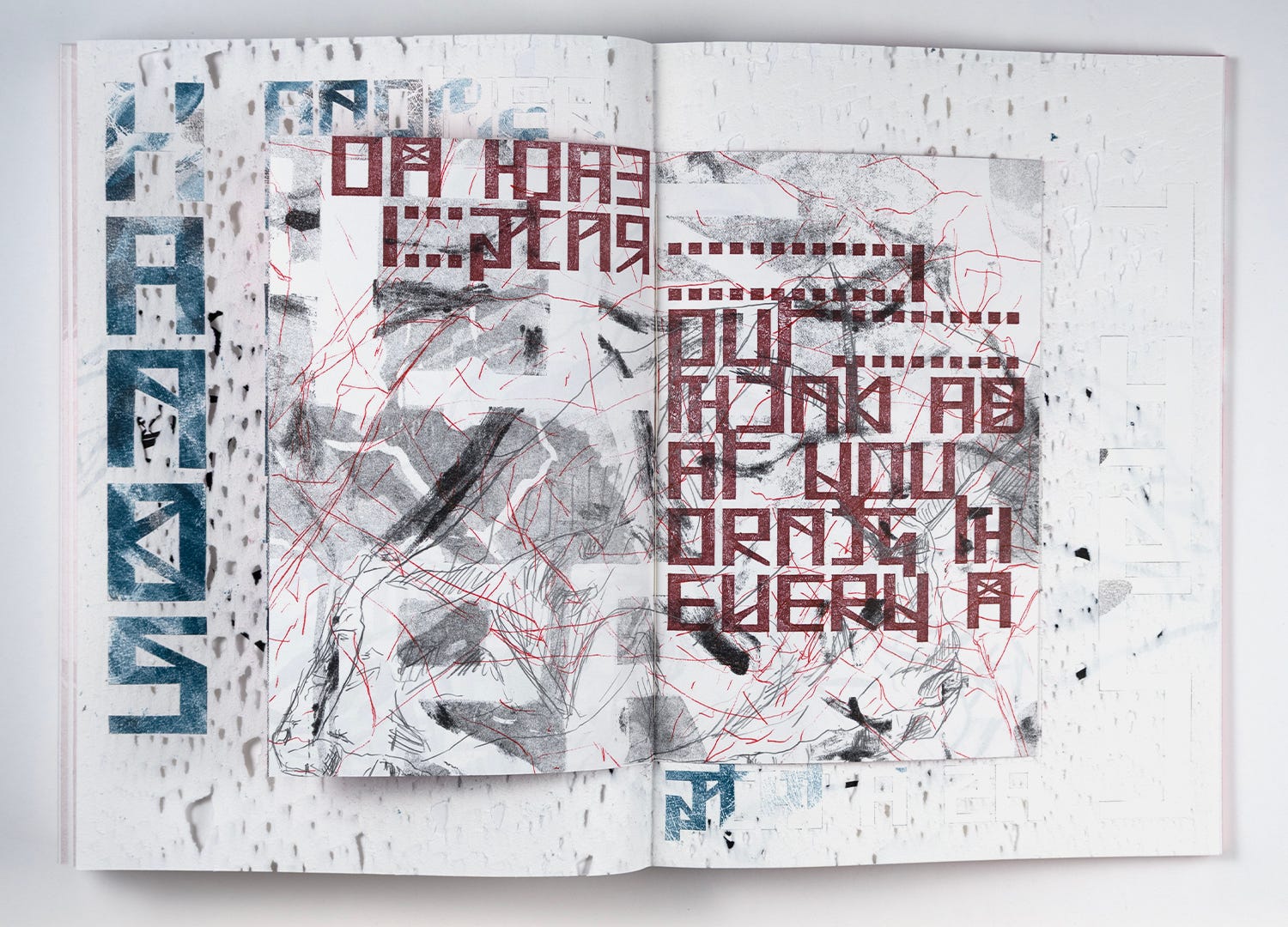
Day Book began before Drift • Fragment, but was finished after. I don’t know when the initial ideas for each happened, or in what order.
I ended up with a book that is mostly blank. None of it is filler.
Idea: A drumleaf book where only the “backs” of the pages are marked. Or everything on the front is blind stamped.
Throughout the process of making the book I have referred (to myself, in my thoughts) to structure x as interruptions, dreams, reveries, moments, memories, spells, prayers. All of these are probably correct.
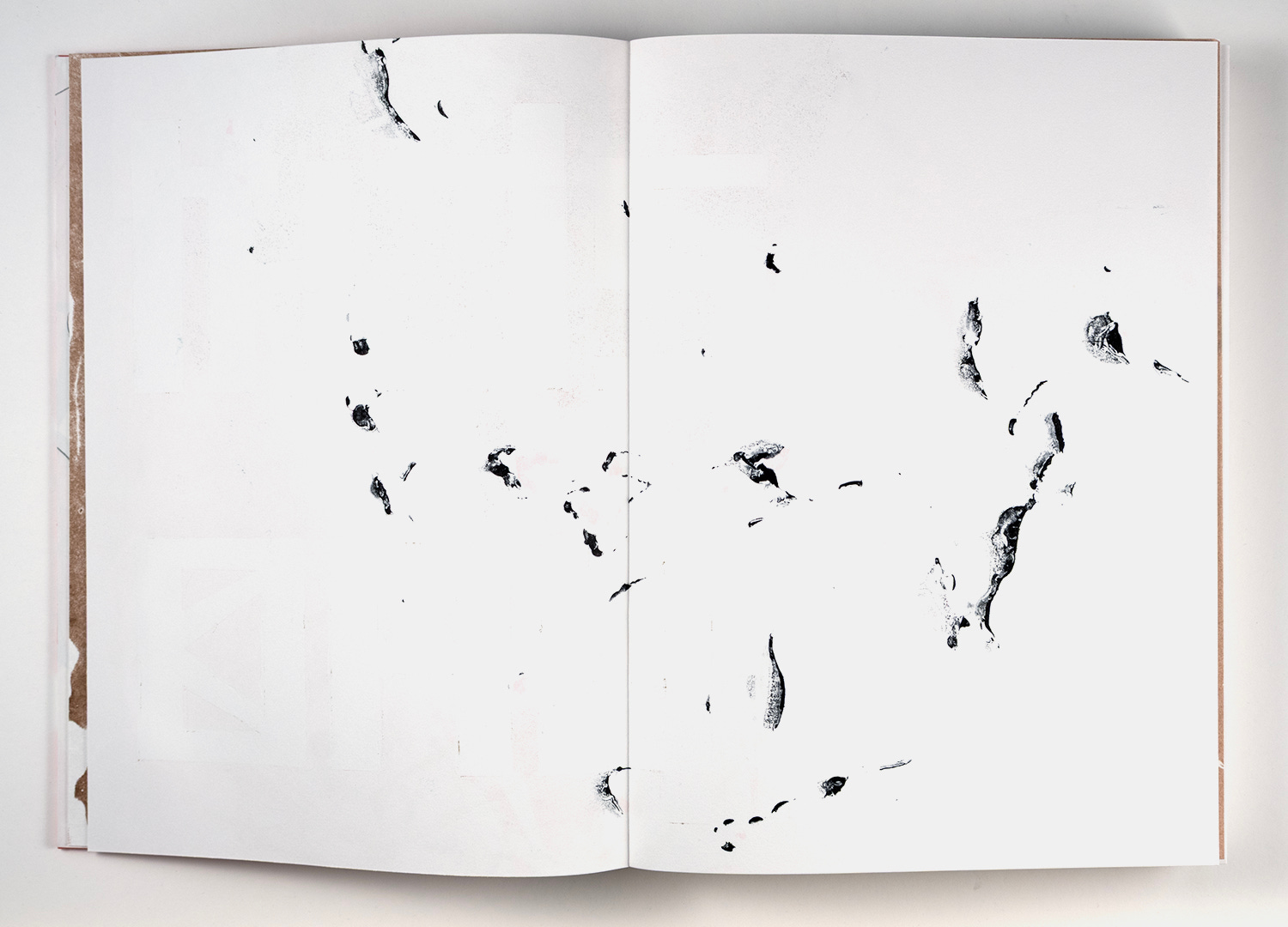
Day Book is a dark book for dark times. Memento mori. Danse macabre. Nature morte. A warning: “Remember that you will die.” Remember the future. Carry it in the present.
Day Book is very difficult to read. Lines break in the middle of words, the text changes directions, mirrors itself. (A book of ghosts.) It does follow a pattern. Using Primer No. 2 helps as a reference. It is very intentionally a very slow book. Attention, again and again and again, is the book.
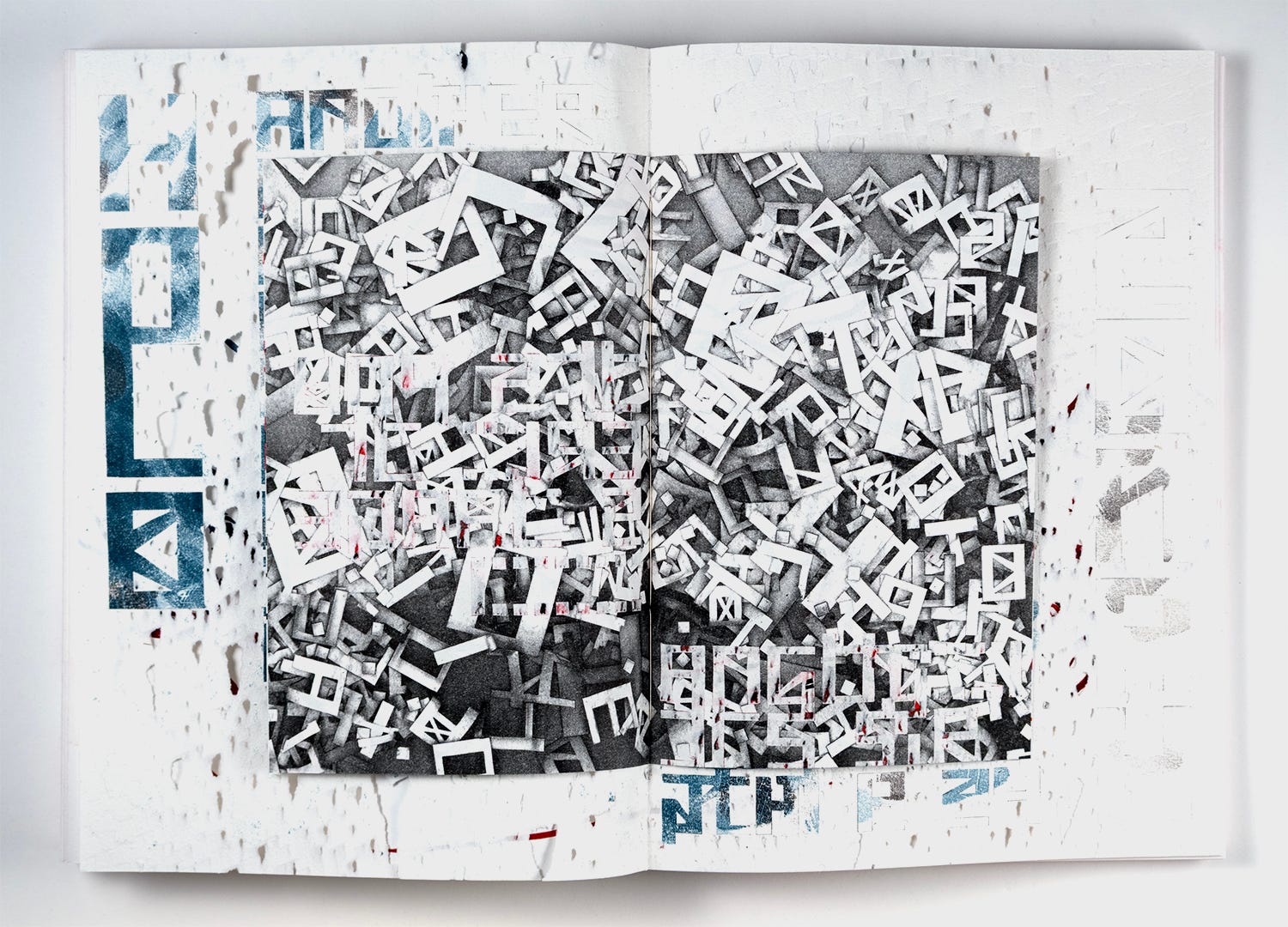
Trying to read is reading. Learning to read is reading. Reading is a process, an experience, not the completion of a goal.
Will Day Book ever be read? The book only exists in its reading. (A book of ghosts.)
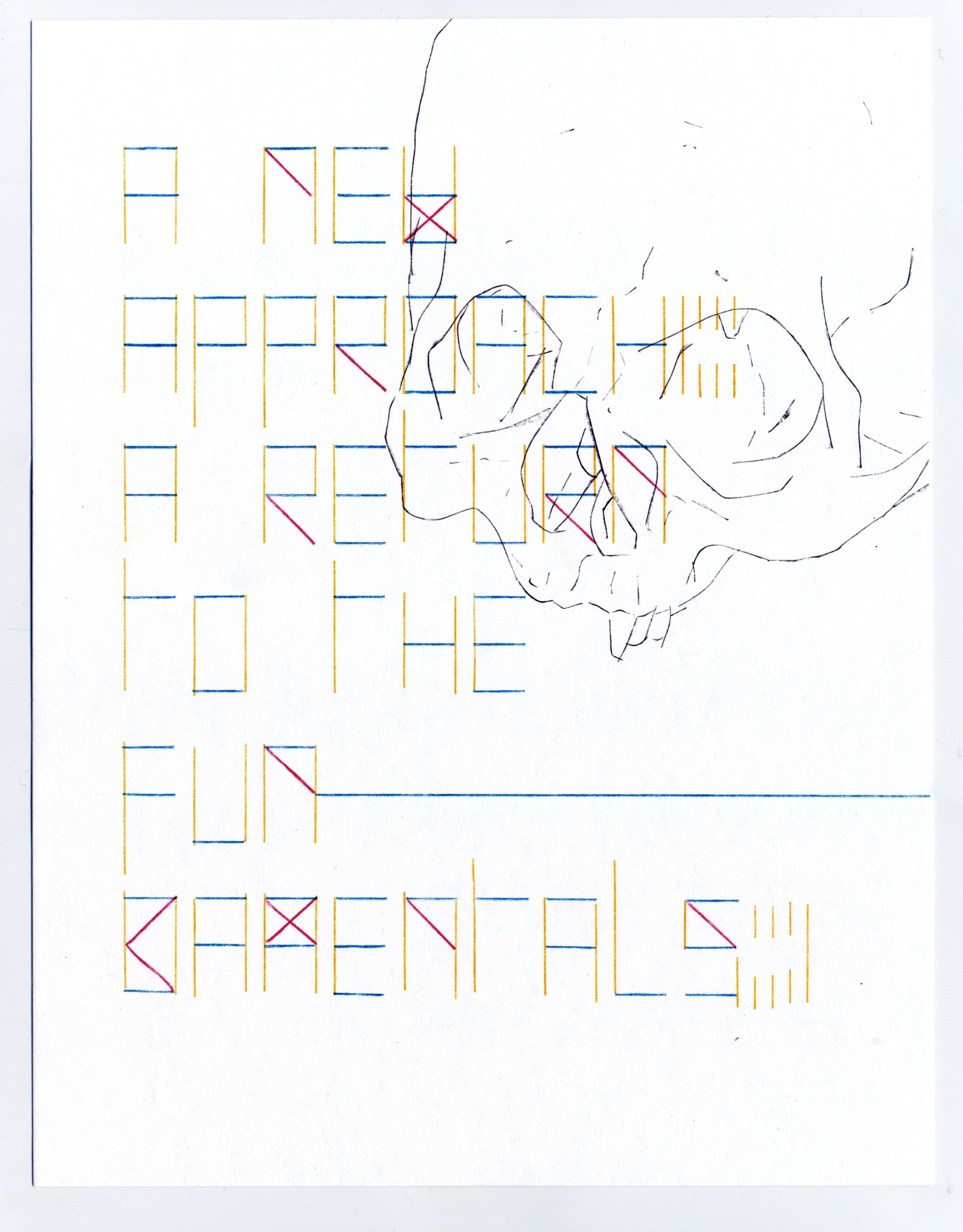
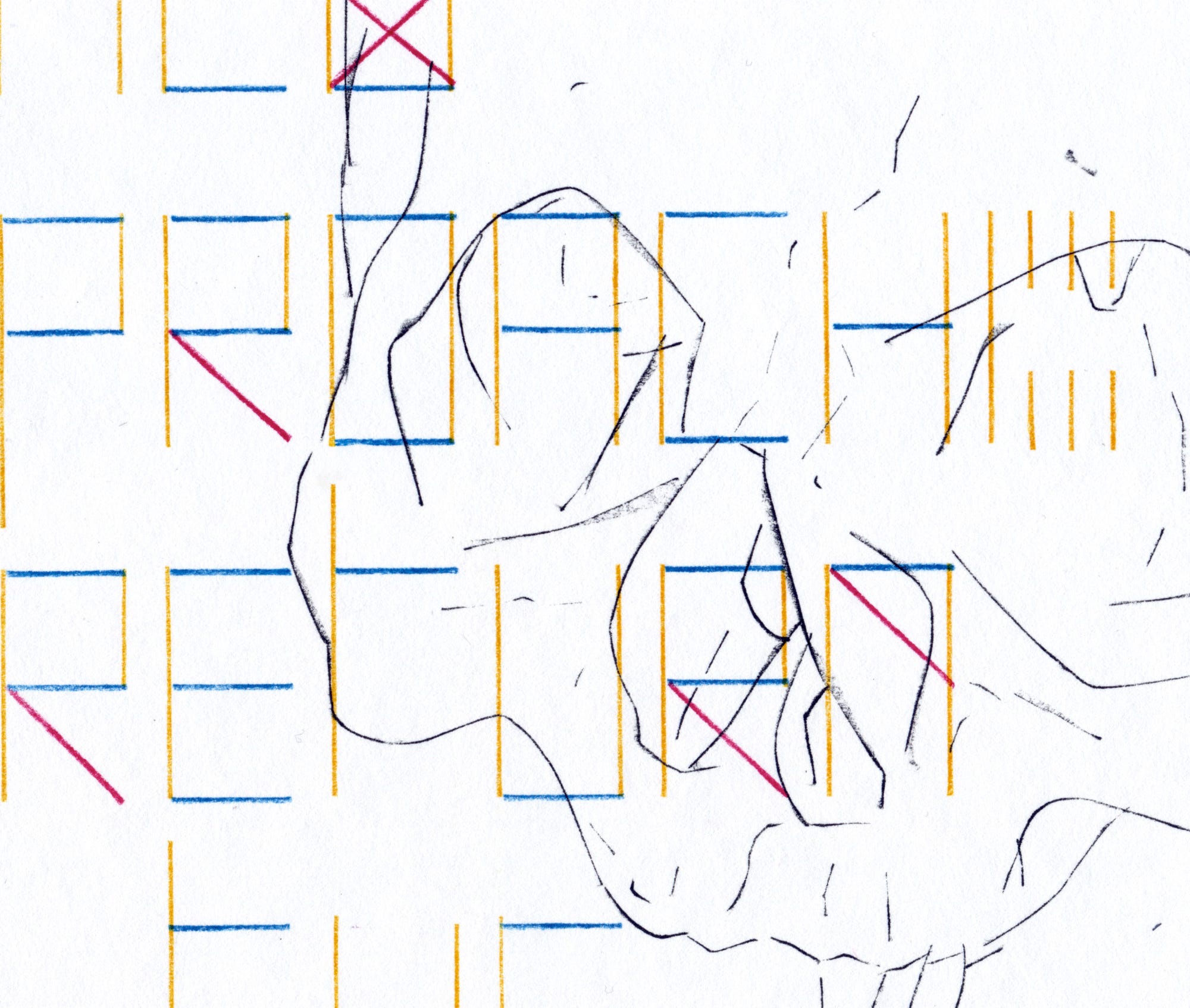
The whole process of Day Book has brought me closer to my goal of a book that is written, visually composed, and printed at the same time. Another project, the print called Iteration (image below) is a post-study of Day Book, and it also opened up some technical printing possibilities. It was printed entirely from strips of paper, cut to type-high, stood with the thin edge facing up, and positioned with furniture and magnets. That technique, combined with collagraph, pressure printing, and using multiple block heights, will allow me to sketch, compose, and write (with my Threshold Alphabet) in the bed of the press.
I am calling a book that is written, visually composed, and printed at the same time a “simultaneous book.” I think that’s a whole other post. I don’t know if this post is finished. I’m stopping here, for now.
This is a free newsletter, and the plan is to keep it that way. If you would like to support the NewLights Press (your support is needed & greatly appreciated!) the best way to do that is to subscribe or just buy some books or prints. Thank you!